
In Situ Metallography Testing
Precision in Testing, Excellence in Engineering
In Situ Metallography Testing
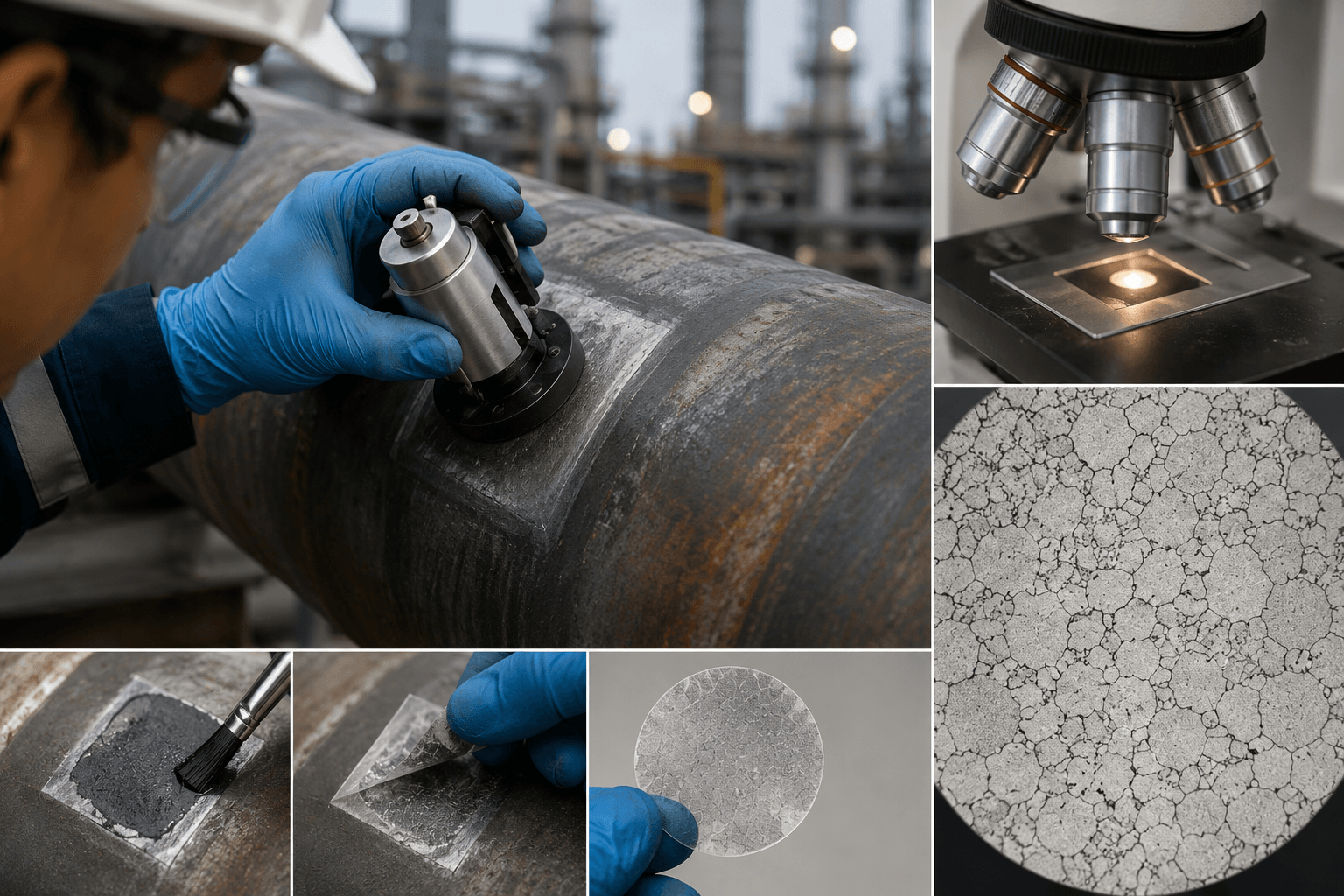
In Situ Metallography Testing is a non-destructive testing (NDT) technique used to examine the microstructure of metallic components directly at the installation site without removing or damaging the equipment. This method helps evaluate material condition, identify structural changes, and detect early signs of degradation, enabling timely maintenance and ensuring safe operation.
What We Inspect
- Grain size and grain boundaries
- Creep damage
- Carbide spheroidization
- Graphitization
- Decarburization
- Phase transformations
- Heat treatment verification
- Microstructural degradation
- Surface defects and material abnormalities
Need Help?
Customer Services
+91 9822522259
Email Support
sales@svtechengineering.com
Other Services
- Third Party Inspection
- Welding Consultancy
- NDT Training Institute
- Calibration Services
Applications
- Power plants
- Refineries and petrochemical industries
- Oil & gas facilities
- Steel and manufacturing plants
- Pressure vessels
- Boilers and heat exchangers
- Turbines and pipelines
- Heavy engineering equipment
Features & Benefits
- Non-destructive inspection
- On-site testing without dismantling equipment
- Detects creep damage and material degradation
- Evaluates grain structure and phase changes
- Reduces downtime and maintenance costs
- Improves equipment reliability and safety
- Suitable for high-temperature service components
- Fast and accurate results
Our Testing Process
Surface preparation and polishing
Chemical etching of the test area
Microstructure replication using replica film
Laboratory microscopic examination
Analysis of grain structure and material condition
Detailed inspection report with recommendations
Why Choose Us
Experienced NDT professionals
Portable on-site metallography equipment
Accurate microscopic analysis & Comprehensive reporting
Standards-compliant inspection